
How Dr. Steve Dullard is Building the “Mayo Clinic of Veterinary Medicine"
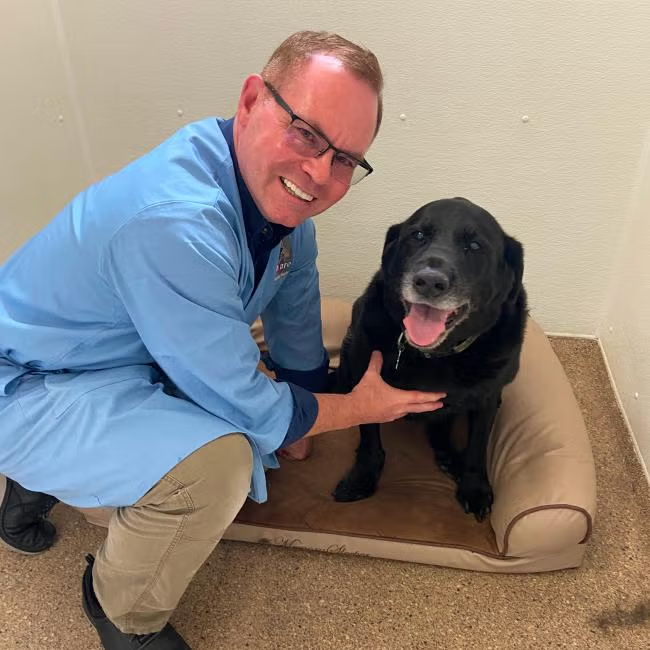
We sat down with Dr. Steve Dullard, Chief of Staff at Ancare Veterinary Hospital, a full service, multi-location veterinary hospital in Northern Illinois.
Watch the full interview and read on below to hear Dr. Dullard expand on leadership, mentorship, and building a practice designed to last.
Dr. Steve Dullard doesn’t believe great practices are built overnight. Over nearly four decades in veterinary medicine, he has intentionally shaped his hospital around a single long-term goal: becoming the "Mayo Clinic of Veterinary Medicine" in Northern Illinois.
In this interview, Dr. Dullard explains how that vision guided his decisions on staffing, training, pricing, leadership, and client care, and why persistence matters more than quick wins.
Start Early. Build Intentionally.
Dr. Dullard’s practice began investing in people more than 20 years ago by welcoming veterinary technician externs. Instead of treating externships as informal shadowing, his team built a real curriculum and mentoring structure.
That investment paid off:
- A steady pipeline of skilled technicians
- High retention through meaningful utilization of tech skills
- Multiple assistants advancing through technician school
- A former head CVT becoming a full-time instructor at a tech school
For Dr. Dullard, this kind of infrastructure is essential for the future of independent practices.
Hands-On Training Creates Confident Veterinarians
Recruiting veterinarians in a rural market wasn’t easy, so Dr. Dullard built a structured externship program for vet students, complete with housing and clear learning objectives.
Students don’t just watch, they do.
From first spays and neuters to supervised procedures through partnerships with local humane societies, externs gain real experience early. One quote he often shares sums it up:
“Watching is easy. Doing is hard.”
That mindset prepares new doctors for practice and creates loyalty to the hospital long before graduation.
Volume, Capability, and Financial Reality
Dr. Dullard is candid about economics. Practices must see enough cases per day to remain healthy, and they must be willing to perform procedures in-house when appropriate.
Key principles he emphasizes:
- Sustainable volume is necessary for profitability
- Over-referring erodes margins and limits growth
- In-house capabilities create flexibility and cash flow
- Pricing should reflect local cost of living, not inflated corporate benchmarks
Operating independently allows his practice to pay doctors competitively while keeping care accessible for clients.
Technicians Are Not “Dog Holders”
Retention starts with respect. Dr. Dullard believes many technicians leave the profession because they aren’t allowed to use their full skill set.
His approach:
- Train technicians deeply
- Trust them with responsibility
- Let veterinarians delegate without disengaging
- Maintain cross-training so leaders can still perform core tasks
Strong teams multiply a veterinarian’s impact and improve patient throughput without sacrificing quality.
What the Mayo Clinic Model Looks Like in Practice
The “Mayo Clinic” idea isn’t about fancy equipment. It’s about ownership and continuity.
Dr. Dullard’s hospital emphasizes:
- Seeing a case through from start to finish
- Strong in-house diagnostics for rapid answers
- Collaborative doctor decision-making
- Clear plans delivered with confidence
Clients value speed, clarity, and consistency. So do staff members.
Core Values Drive Daily Decisions
Through EOS planning, Dr. Dullard’s team defined core values that guide every choice. One stands out: Educate.
Education applies to:
- Continuous learning for doctors
- Skill development for staff
- Clear, collaborative communication with clients
This mindset builds trust and improves outcomes across the board.
Leadership, Communication, and Trust
Effective communication isn’t just what you say. Dr. Dullard highlights simple habits that matter:
- Stand beside clients, not across from them
- Review results together
- Invite questions naturally
- Admit when you need to research further
Confidence comes from honesty, preparation, and shared understanding.
"Chop Wood, Carry Water."
One book Dr. Dullard now requires externs to read is Chop Wood Carry Water by Joshua Medcalf, which reinforces a theme he lives by: success comes from consistent effort.
Greatness isn’t luck. It’s showing up daily, volunteering, learning, and preparing for opportunities before they appear.
That philosophy has helped him stay passionate nearly 40 years into practice.
A Career You’re Proud Of
Dr. Dullard’s purpose is simple: make a difference you’re proud of.
When medicine, leadership, and values align, work stays meaningful. His advice to young veterinarians is to write down personal and professional goals at 1, 3, 5, 10, and 20 years, and revisit them often.
Those goals guide what matters and keep the practice moving forward.
---
Dr. Stephen J. Dullard, DVM, ABVP is Chief of Staff at Ancare Veterinary Hospital, a multi-location veterinary practice in Northern Illinois. A 1986 graduate of Iowa State University, he is a board-certified specialist in canine and feline practice with a professional focus on surgery, feline medicine, and ultrasonography. Dr. Dullard has served in numerous leadership roles at the state and national level, including President of the Illinois State Veterinary Medical Association and delegate to the American Veterinary Medical Association House of Delegates. He is a national lecturer, published author, and longtime advocate for education, mentorship, and independent veterinary medicine.
Any information, materials, analyses, or communications provided by VetVet are for informational purposes only and do not constitute, and should not be relied upon as, accounting, financial, legal, tax, real estate, or other professional advice, or advice of any kind. VetVet does not provide accounting, financial, legal, tax, real estate, or other advisory services.
Certain content made available by VetVet may be generated, assisted, or edited using artificial intelligence or similar automated tools. VetVet makes no representations or warranties as to the accuracy, completeness, timeliness, or quality of such content and disclaims any responsibility or liability arising from reliance on it.
Views, statements, or opinions expressed by guest contributors, whether in written, audio, video, or other form, are solely those of the individual contributors and do not necessarily reflect the views of VetVet. VetVet does not endorse, verify, or assume responsibility for any such statements or opinions.
You are solely responsible for conducting your own independent diligence, investigation, and analysis and for obtaining advice from appropriately licensed and qualified professionals before making any decision or taking any action that may affect you, your business, or any other person or entity.
