For many veterinary practice owners, artificial intelligence still feels like a distant or even risky concept. After decades of practicing medicine a certain way, it’s understandable many veterinarians are cautious about introducing new technology into the exam room. But AI in veterinary medicine isn’t about replacing clinical judgment or changing how you practice care. At its best, it’s about giving time back to the people who actually deliver it, and improving the experience for animals and their owners.
Today’s veterinary AI tools are increasingly focused on one of the profession’s biggest pain points: administrative burden. Documentation, records, and follow-up tasks can easily consume one to two hours a day for a veterinarian. When that workload is reduced, the impact is immediate: less burnout, more presence with patients and clients, and the ability to care for more animals without extending already long days. Over time, those efficiency gains can also improve practice profitability, not by cutting corners, but by allowing teams to work at the top of their license.
AI is also beginning to play a meaningful role in clinical decision support across veterinary medicine. In day-to-day practice, whether in general practice, emergency care, or specialty disciplines, AI tools can help veterinarians surface relevant insights, reduce search friction, and make it easier to synthesize information from complex cases. These tools are not intended to replace clinical expertise but to augment it by acting as an additional layer of support within an already demanding diagnostic and decision-making workflow. Taking that a step further, in areas such as radiology and diagnostic imaging, AI tools can assist with image interpretation by flagging potential abnormalities in X-rays, ultrasound, and other scans to support faster and more consistent reads. At present, these tools are generally best used with a human in the loop, preserving the veterinarian’s role in critical decision-making while still benefiting from the speed and consistency that AI can provide.
Before integrating any solution, it’s critical to evaluate the software as meticulously as one might for a new piece of medical equipment. Ask how data is stored and protected, whether client and patient information is encrypted, and if the company complies with relevant privacy and security standards.
AI should feel like a quiet assistant, not another system or software to manage and train. When thoughtfully chosen and responsibly implemented, it can support sustainable practice ownership while preserving what matters most: high-quality care and the human connection at the heart of veterinary medicine.
If you’re interested in learning more about how veterinary AI tools can improve your practice's bottom line, standard of care, and team’s workload, visit https://www.co.vet/ or connect with me here.
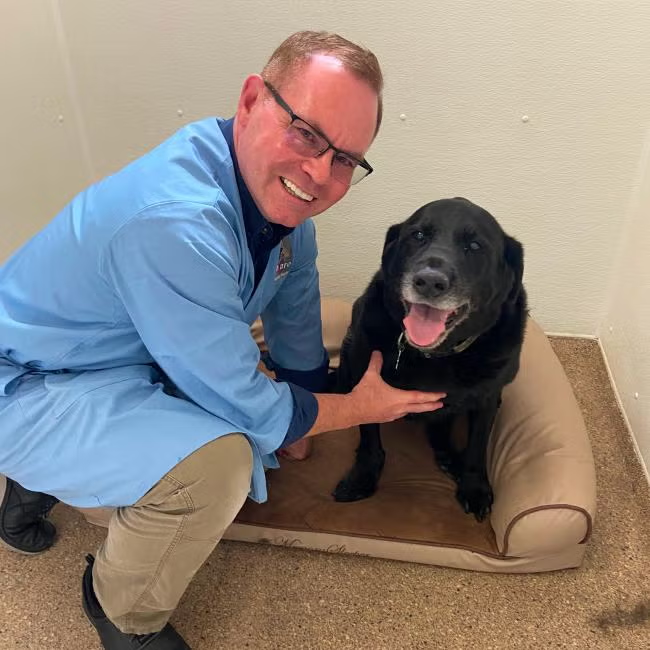
This article was contributed to by Dr. Mike Mossop, DVM and Co-founder of CoVet, the AI-powered assistant built by veterinary professionals who understand the realities of life in the clinic. |
If you are evaluating alternative care models, VetVet is happy to compare notes, pressure-test the economics, or help you think through how a model like this may be viewed by future buyers. You can reach us at hello@vetvet.co or 332-213-2057.
Any information, materials, analyses, or communications provided by VetVet are for informational purposes only and do not constitute, and should not be relied upon as, accounting, financial, legal, tax, real estate, or other professional advice, or advice of any kind. VetVet does not provide accounting, financial, legal, tax, real estate, or other advisory services.
Certain content made available by VetVet may be generated, assisted, or edited using artificial intelligence or similar automated tools. VetVet makes no representations or warranties as to the accuracy, completeness, timeliness, or quality of such content and disclaims any responsibility or liability arising from reliance on it.
Views, statements, or opinions expressed by guest contributors, whether in written, audio, video, or other form, are solely those of the individual contributors and do not necessarily reflect the views of VetVet. VetVet does not endorse, verify, or assume responsibility for any such statements or opinions.
You are solely responsible for conducting your own independent diligence, investigation, and analysis and for obtaining advice from appropriately licensed and qualified professionals before making any decision or taking any action that may affect you, your business, or any other person or entity.